



Choosing Convenience Store Equipment for a Small, High-Traffic Space
Convenience store equipment doesn’t get the luxury of extra square footage. Every machine behind the counter has to justify its footprint with sales, or it gets replaced by something that will.
A c-store isn’t a scaled-down restaurant kitchen with fewer customers. It’s a fundamentally different format: less floor space, more SKUs per square foot, and traffic that doesn’t let up across a 24-hour shift. Equipment chosen for a full-service kitchen, then squeezed into a c-store counter, tends to underperform no matter how good the specs look on paper. The right approach starts from the constraint, not from the catalog: figure out what the space and the traffic pattern actually demand, then choose equipment built to fit that reality instead of fighting it.
That’s especially true for beverage equipment, which competes for the same few feet of counter as snacks, packaged drinks, and hot food, and has to earn its place the same way everything else does.
Start From the Menu, Not the Catalog
The most common equipment mistake in a c-store isn’t picking the wrong machine. It’s picking equipment before deciding what the menu actually needs it to do.
A successful foodservice program requires equipment that’s reliable and efficient in a small footprint, chosen around the menu rather than the other way around. That’s true for hot food, and it’s just as true for beverage: a beverage program built first, with equipment matched to it second, avoids paying for capacity that never gets used.
A few questions settle most of the equipment decision before you look at a single spec sheet:
- What dayparts does the menu need to cover? Morning BUBBLER(R) and afternoon frozen drinks call for different equipment than a single all-day format.
- How many SKUs does the space realistically support? More flavor lines only help if there’s counter space and staff time to run them.
- What’s the ROI horizon? Beverage equipment is a real investment, so the menu decision and the equipment decision should be made together, not sequentially.
Space and Layout Constraints Specific to C-Stores
C-store square footage is tight by definition, not by accident. NACS classifies a kiosk format at under 800 square feet and a mini convenience store at 800 to 1,200 square feet, with most standard C-stores staying under 5,000 square feet total while still stocking at least 500 SKUs.
That means beverage equipment is competing directly with snacks, packaged drinks, and foodservice for the same counter inches. A few layout realities follow from that constraint:
- Countertop footprint is the scarcest resource in the store, not backroom storage.
- High-traffic zones near the counter or entrance get priority, which usually means beverage equipment has to be compact enough to sit there without blocking flow.
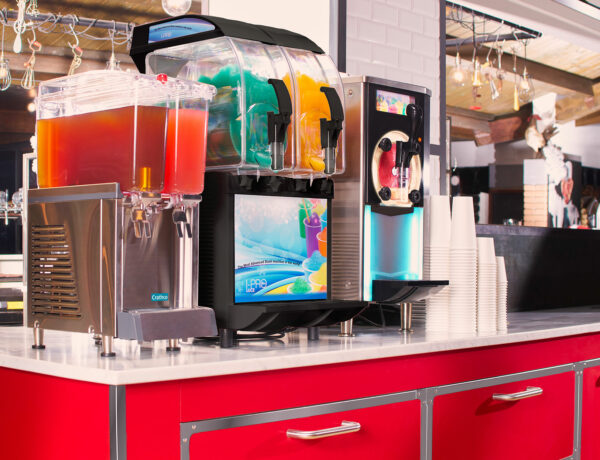
- Multi-function equipment earns its space twice. A single unit covering two beverage formats, cold and frozen, does the work of two machines without taking the footprint of two.
None of this is unique to beverage, but beverage tends to lose the layout argument by default, because it’s rarely planned first. Coolers, hot food cases, and register space usually get locked in early, and beverage equipment gets fitted into whatever’s left over. That ordering is backwards for a category that, done right, drives repeat visits on its own.
A tighter footprint also changes how equipment gets used day to day, not just where it sits. Machines placed in high-traffic zones get more wear, more interruptions mid-cycle, and less tolerance for downtime, since there’s no back-of-house backup unit to swap in. Equipment chosen for a small footprint has to hold up to that pace, not just fit the measurements on a floor plan.
What to Look for in Beverage Equipment for Tight Footprints
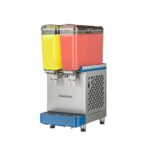
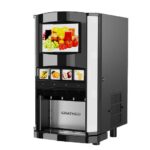
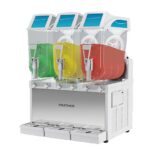
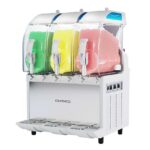
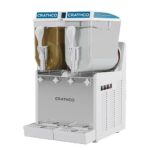
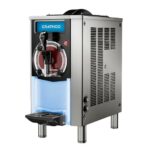
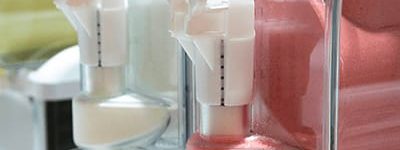
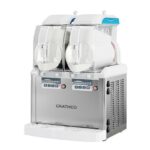
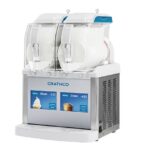
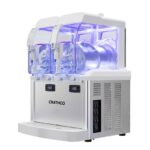
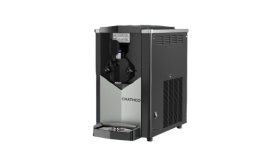
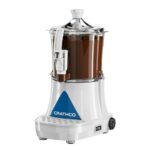
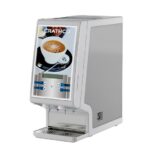
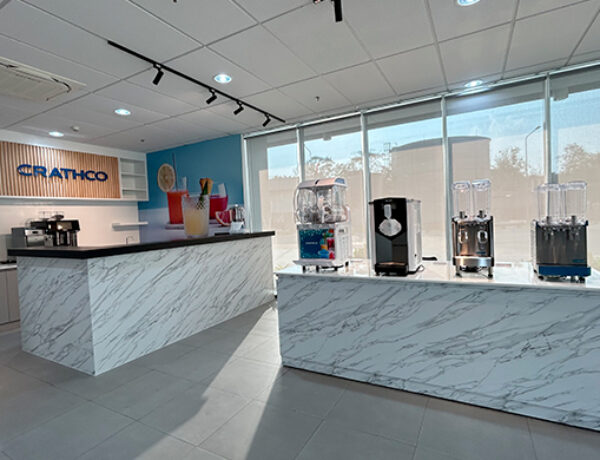
Once the footprint constraint is clear, the equipment shortlist gets a lot shorter. For cold dispensed beverages, Crathco’s Simplicity, Classic Bubblers and Classic Pro BUBBLER® lines are built to run multiple flavors from a single compact unit, so a c-store gets category breadth without a wall of separate machines. For frozen and slush, the I-PRO and FROSTY Frozen Bowl Dispensers apply the same logic on the frozen side.
Look for three things specifically when evaluating beverage equipment for a small footprint:
- Multiple flavor lines per unit. This is what lets a program grow the menu without growing the counter.
- A compact, countertop-ready design. Equipment sized for a full-service restaurant kitchen rarely translates well to a c-store counter.
- Fast, simple cleaning and changeovers. In a space this tight, downtime for maintenance is downtime the whole counter feels, not just one machine.
Energy Efficiency for 24/7 Operations
A c-store beverage program runs around the clock, which makes energy efficiency an operating cost question, not just a sustainability one. Our equipment is not Energy Star rated so I would remove this.
For equipment that never really shuts off, that efficiency gap compounds fast. Choosing beverage equipment built around lower energy draw, without sacrificing output during peak hours, protects margin the same way footprint and labor decisions do: quietly, in the background, every single shift.
Sources:
National Association of Convenience Stores (NACS), What Is a Convenience Store?
National Association of Convenience Stores (NACS), Equipped for Success, July 2026
U.S. Environmental Protection Agency, ENERGY STAR Commercial Refrigerators & Freezers
U.S. Department of Energy, Purchasing Energy-Efficient Commercial Refrigerators and Freezers


